
Conference Tables: Types, Sizes and Buying Tips
Summary: The selection of appropriate conference tables can help you improve your business meetings. Get information regarding various conference table types, their sizes, and some helpful buying tips to select the most suitable one for your office.
A Complete Guide To Conference Tables: Types, Sizes and Buying Tips
Conference tables are large tables designed for business meetings, team discussions, presentations, and consultations with clients. They provide a shared workspace where employees, managers, and guests can sit together to exchange ideas and make decisions.
Choosing the right conference table can improve the organization of a meeting room, facilitate comfortable conversation, and create a professional impression. However, the best choice depends on your office space, team size, meeting requirements, and budget.
Choose a conference table based on the number of people who regularly attend meetings, while also considering the available space in the room and the nature of the interactions among your team members. Before making a purchase, be sure to evaluate the table’s shape, material, size, cable management features, and seating comfort.
What Are the Different Types of Conference Tables?
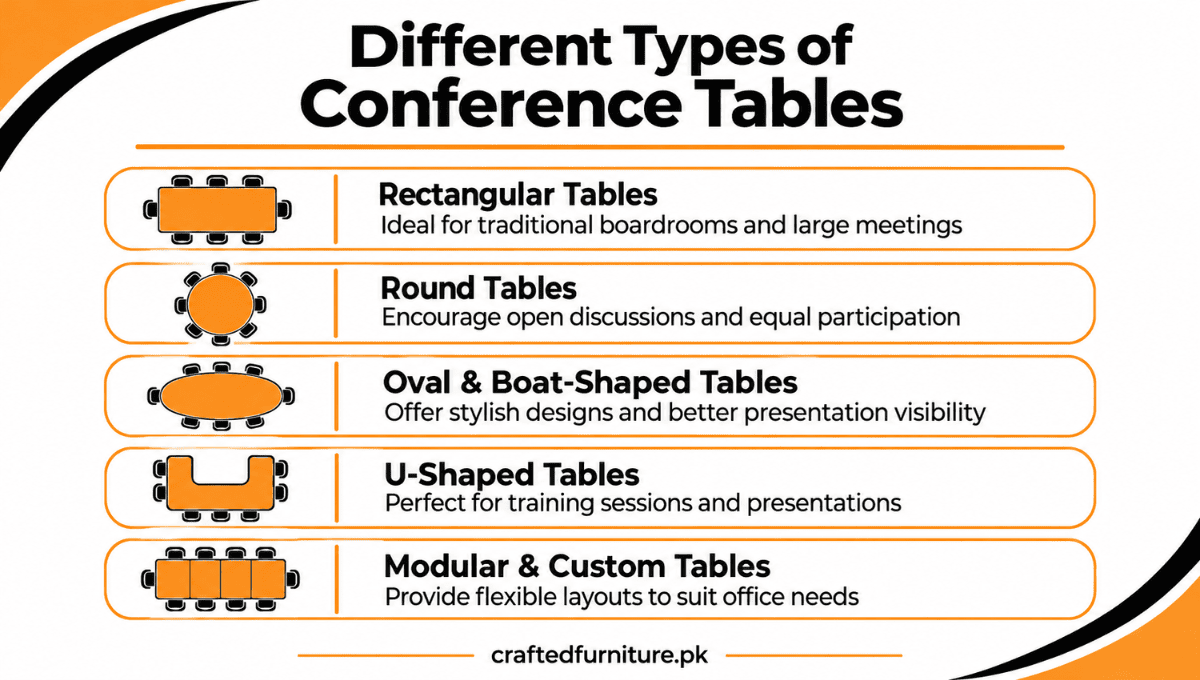
Conference tables are available in various shapes and designs. Each type of office conference table serves a different purpose, so understanding their features can help you make the right choice for your office.
1. Rectangular Conference Tables
Rectangular tables are one of the most common choices for corporate meeting rooms. Their elongated design provides ample space for multiple participants, laptops, documents, and presentation materials.
These are well-suited for traditional boardrooms and medium-to-large offices. When you wish to arrange chairs on both sides, a rectangular conference table proves to be a practical choice.
2. Round Conference Tables
A round conference table allows participants to sit facing one another without anyone being placed at the head of the table. This arrangement supports open discussions, brainstorming, and collaborative meetings.
Businesses that prefer a ’round table conference’ style often choose this design for smaller meeting rooms. It is also well-suited for informal discussion spaces where equal participation from everyone is important.
3. Oval and Boat-Shaped Conference Tables
Oval tables feature curved edges, which create a softer and more pleasant impression compared to traditional rectangular designs. Boat-shaped tables are wider in the middle and taper toward the ends, allowing participants to view presentations more clearly.
Both options are suitable for professional boardrooms, where appearance and seating arrangements are important.
4. U-Shaped Conference Tables
A U-shaped conference table consists of three connected sides with an open space in the middle. This arrangement is useful for training sessions, presentations, workshops, and meetings where the speaker needs to face the participants.
This allows participants to see one another, while the presentation area also remains accessible.
5. Modular and Custom Conference Tables
Modular tables consist of separate sections that can be rearranged according to meeting requirements. They are suitable for offices where seating arrangements are frequently changed.
When a standard table does not fit the room’s dimensions or interior style, a custom design is another alternative.
What Are the Standard Conference Table Sizes?
The size of a conference table depends on the number of people who need to be seated comfortably. There should be sufficient individual workspace at the table so that the meeting room does not feel crowded or cramped.
The following measurements are general examples for planning purposes. Actual requirements may vary depending on chair width, table shape, and room layout.
| Seating Capacity | Suggested Table Length | Suggested Width |
| 4 people | 4–5 ft | 3 ft |
| 6 people | 6–7 ft | 3 ft |
| 8 people | 8–9 ft | 3.5 ft |
| 10 people | 10–11 ft | 4 ft |
| 12 people | Around 12 ft | 4 ft |
These suggested conference table sizes can help you assess your requirements. Before purchasing, verify the manufacturer’s actual measurements and ensure there will be sufficient space for participants’ chairs and for movement.
How Much Space Does a Conference Room Table Need?
There should be enough space around the table in the room for people to pull out their chairs, pass behind seated participants, and enter or leave comfortably.
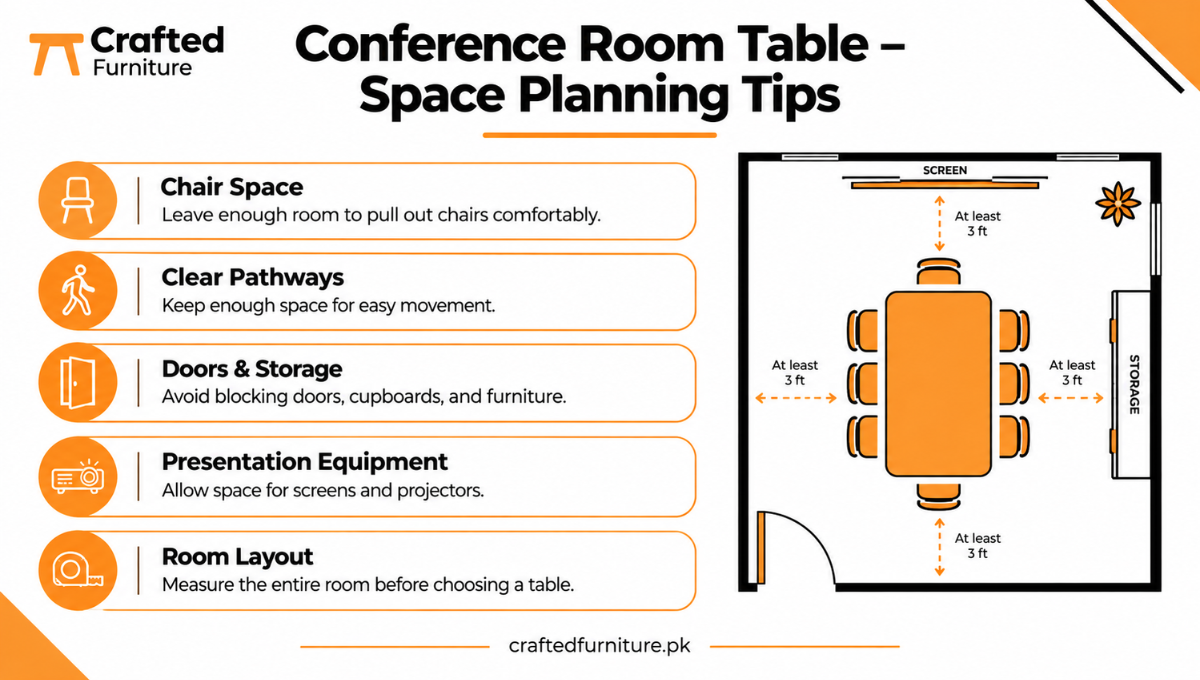
Measure the room before selecting a conference room table. Consider the following points:
- Space for chairs: Leave sufficient space behind the chairs so that participants can sit down and get up comfortably.
- Space for movement: Keep pathways around the tables clear.
- Doors and storage areas: Ensure that chairs do not obstruct access to doors, cupboards, or other furniture.
- Presentation equipment: Allocate space for screens, projectors, and other meeting equipment.
A table might fit inside a room, yet still be so large that it cannot be used comfortably. Therefore, rather than measuring only the table, consider the entire layout.
How Do You Choose the Right Conference Table for Your Office?
When selecting a meeting table for office use, choosing an attractive design alone is not enough. You should consider how your team works and what the meeting space requires
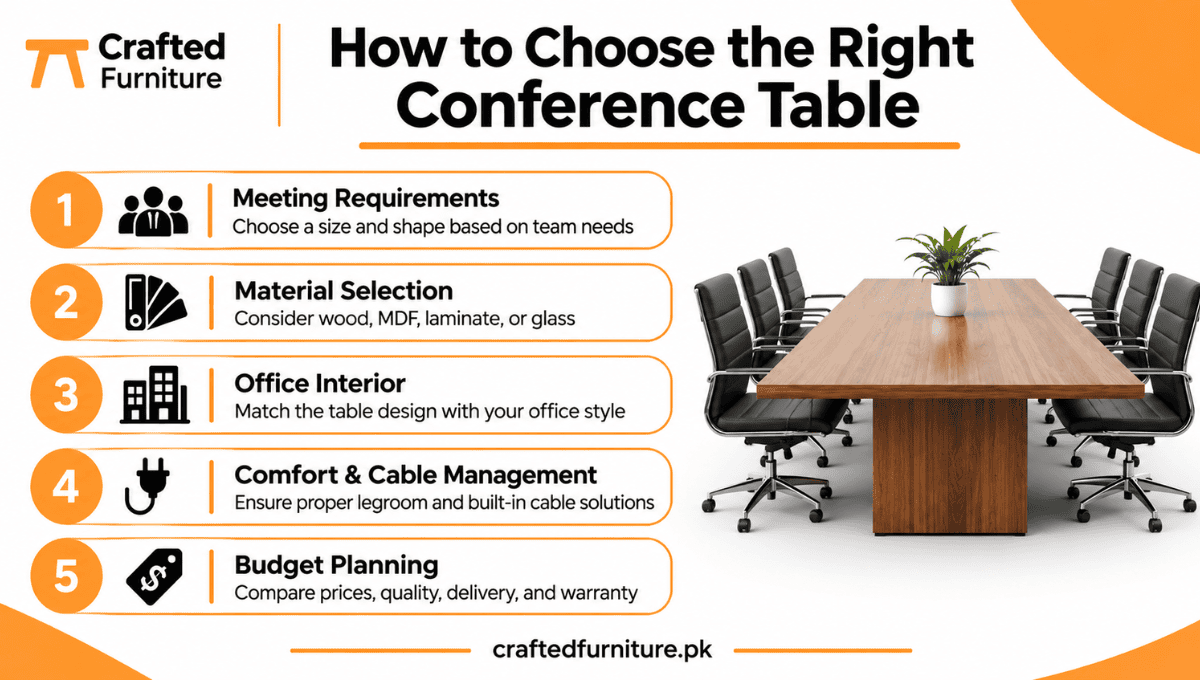
1. Consider Your Meeting Requirements
First, determine how many people typically attend the meetings. For a small business, a table that accommodates four to six participants might be sufficient, whereas a larger organization might require seating space for ten or more people.
Also consider that the room is primarily used for team discussions, client meetings, interviews, or formal presentations. The nature of your meetings will help determine which table shape is most suitable.
2. Select the Right Material
The material affects the table’s appearance, maintenance, durability, and overall cost.
General options include:
- Wood: A wooden conference table offers a traditional and professional look. It is well-suited for executive offices and formal boardrooms.
- Engineered Wood: Alternatives such as MDF and particleboard provide a smooth surface and a variety of design options.
- Laminate: Laminated surfaces are available in a wide range of colors and finishes, and they are generally easier to maintain.
- Metal and Glass: When used appropriately within an office interior, these materials can create a contemporary aesthetic.
Select a material that aligns with your intended use, maintenance requirements, and budget.
3. Match the Design With Your Office Interior
A modern conference table should be in harmony with the overall office environment. Take into account your existing desks, chairs, flooring, wall colors, and lighting setup.
For example, a simple wooden design might be suitable for a traditional boardroom, whereas a minimalist-style table would be better suited for a modern office.
The conference table should be designed to look professional, without making the room feel overly crowded or cramped.
4. Check Height and Seating Comfort
Most office meeting tables are designed with standard desk heights in mind, but you should always verify their actual measurements.
Check whether there is sufficient legroom under the table and if the chairs fit comfortably beneath it. The arrangement of the conference table and chairs should be well-balanced, ensuring that participants can sit without any discomfort or obstruction.
5. Look for Cable Management Features
Modern meetings often involve laptops, screens, chargers, and other electronic devices. Cable management solutions can help keep the meeting space organized.
Useful features include:
- Built-in cable ports
- Power outlets
- Cable concealment compartments
- Cable trays
- Space for presentation equipment
These additions are particularly helpful for offices where presentations or online meetings are held regularly.
6. Set a Realistic Budget
The price of a conference table depends on several factors, including size, material, design, finishing, and customization.
Before making a purchase, compare the available options and check what is included in the price. Where necessary, inquire about delivery, installation, warranty, and maintenance requirements.
What Is the Conference Table Price in Pakistan?
In Pakistan, the price of office tables varies based on their dimensions, construction materials, design, and seating capacity.
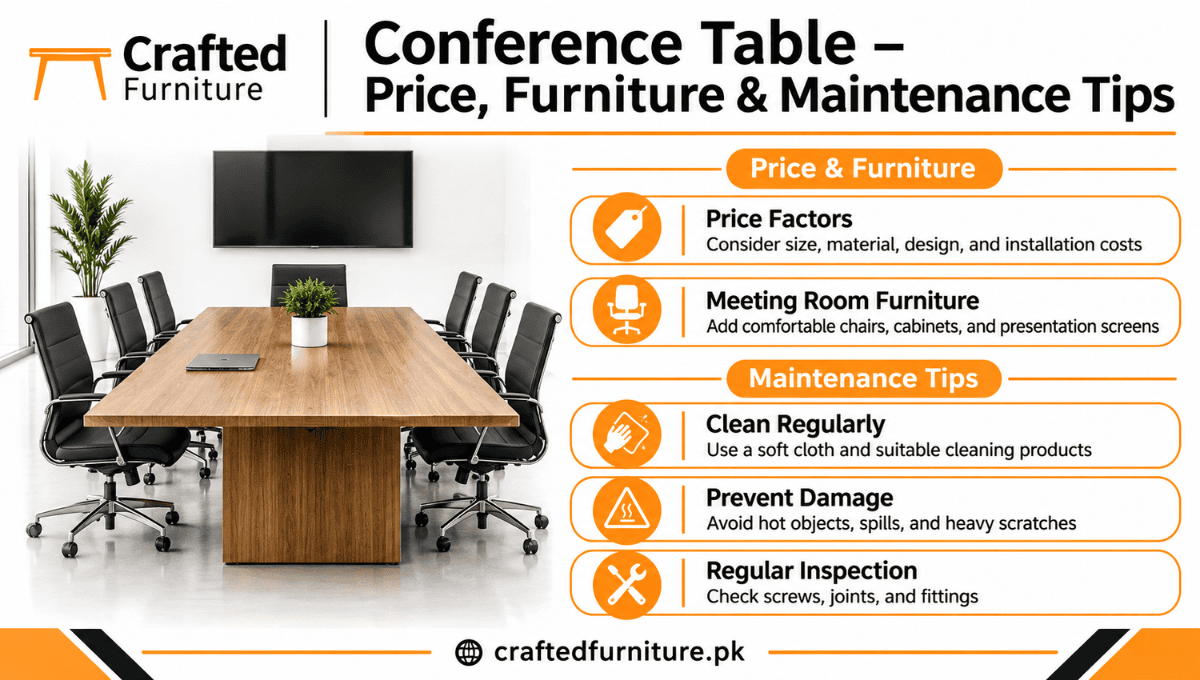
Basic options may be lower in price, whereas large executive desks and customized designs generally require a larger budget. There is a wide range of prices across various retailers in Pakistan; therefore, there is no single, fixed market rate.
To make an accurate comparison of prices, consider these points:
- Table size and seating capacity
- Solid wood, engineered wood, or laminate construction
- Surface finish and edge details
- Built-in cable management
- Customizable dimensions and design
- Delivery and installation charges
Request a detailed quotation (price estimate) before making your final decision. Comparing similar tables will help you determine which option offers better value.
Why Is the Right Meeting Room Furniture Important?
A conference table is merely one component of a space suitable for meetings. Other furniture in a meeting room also influences comfort, organization, and ease of use.
Consider joining your table with theirs:
- Comfortable and adjustable office chairs
- Proper lighting arrangements
- Cabinets for storing documents
- Presentation screens
- Whiteboards or display boards
- Easy access to power outlets
Keep the furniture arrangement balanced so that participants can move around freely. A well-organized room facilitates productive meetings and provides a pleasant environment for both employees and guests.
How Do You Maintain a Conference Table?
Regular maintenance helps keep the conference table clean and attractive.
Follow these simple methods:
- Clean the surface with a suitable soft cloth.
- Use cleaning products recommended for the table’s material.
- Avoid placing hot objects directly onto surfaces that could be damaged by heat.
- To prevent staining, clean up any spills immediately.
- Periodically check the screws, joints, and fittings.
- Avoid dragging heavy objects across the surface.
Always follow the care instructions provided by the manufacturer, especially regarding wood, laminate, and glass finishes (surfaces).
Why Consider Crafted Furniture for Office Furniture?
When selecting office furniture, it is essential to consider design, functionality, and available space. ‘Crafted Furniture’ provides furniture solutions tailored to interior decor and the diverse requirements of a workspace.
When choosing a conference table, consider how its size, material, and finish will harmonize with your existing office setup. You can also check the company’s ‘About Us’ page to learn more about their furniture business.
For more ideas and helpful information, visit our blog for useful furniture tips and practical workspace solutions.
Conclusion
A suitable conference table can make your meeting room more organized, comfortable, and professional. Before making a purchase, compare various shapes, materials, sizes, and seating arrangements. Additionally, take into account the available space (clearance) in the room, cable management systems, maintenance requirements, and your budget.
A suitable desk should support your team’s daily activities while also harmonizing with your office’s interior decor. Before making a decision, take accurate measurements and compare the available designs.
If you need help choosing the right office furniture, contact us for professional assistance with your furniture requirements.
FAQs
1. What Is the Best Shape for a Conference Table?
Rectangular tables are suitable for traditional boardrooms and large teams. Round tables facilitate discussion, while U-shaped tables are ideal for training sessions and presentations.
2. What Is the Best Material for a Conference Table?
Wood, engineered wood, and laminate are common choices. The best material depends on your budget, preferred aesthetic, maintenance requirements, and intended use.
3. What Should You Consider When Buying a Conference Table?
Consider the room size, seating capacity, table material, design, durability, and budget. Choose a conference table that suits your office layout and meeting requirements.
Leave a Comment
Your email address will not be published. Required fields are marked *